Showing posts with label Nutrition. Show all posts

Thursday, September 1, 2011

5 Tips for the vegan beginner: Going vegan and staying vegan!

Tip #1: Breathe.

With any new undertaking in life, beginning is almost always the hardest part. The first tip is to relax, go slow, and allow yourself – and your body – time to adjust. I wouldn’t recommend going vegan cold turkey. So much pressure! And also, often times, when you eliminate foods from your body abruptly, you’ll crave it more. Just breathe. Focus. And ease into being vegan nice and slowly!

Tip #2: Have a Mission.

Whip out that old journal you’ve been neglecting for months and simply write out all the reasons why you are deciding to make this major change in your life. Be your own biggest supporter. Thoughts to consider:

Why am I doing this?

What do I hope to get out of this? Mentally, emotionally, and physically?

What did an animal have to go through to get on my plate?

How do I feel after consuming animal products?

What can I reflect on if I’m feeling like giving up in the future?

Gather these thoughts together to create your own vegan mission statement. Get creative and make the words bright and artistic, and post this on your mirror so that you can reflect on your beliefs everyday. Putting words to your cause is therapeutic, and gives the transition more ammunition.

Tip #3: Research.

The unknown is scary. Often, the best way to take the scary out of the unknown is to equip yourself with tons of information and research. Vegan sites that are in place for your education and safe transition are virtually endless. Utilize this resource to understand nutritional needs a new vegan has, benefits to your new lifestyle, and tips to stay committed to your cause.

Tip #4: Community.

The most valuable piece of advice for making this transition smoothly is to find a community and interact with other people who can relate. Finding a group of like-minded individuals, or even just a friend or two who share your ethics and drive to do something can make a world of difference. Places to look:

On the Internet: Social websites are a fantastic place to connect with other vegans, asks questions, and find informational guides. You’ll find that vegans are – for the most part – a friendly bunch, eager to help and listen, so don’t be afraid to reach out to your favorite blogger or tweeter for advice.

In school: Either join your college vegan club or start your own! Navigating vegan options in a college setting can be tricky. Brainstorm with like-minded people to figure out food options and ways to raise awareness around campus.

In the community: One word: Meetup.com! Find a vegan meetup group in your area through Meetup to try out new restaurants with a group and attend potlucks.

Even if you don’t live in the most vegan-friendly city, there are options out there almost everywhere. Don’t be afraid to put yourself out there to find your niche. If you’re struggling to find a community that fits your interests, start your own event doing something that motivates you!

Tip #5: Experiment!

Have fun! Find interested recipes online or try to create something using your imagination! The easiest way to stay vegan is by enjoying your new diet and lifestyle, and feeling great inside and out.

Tuesday, July 26, 2011


Ingredients:
1 beet, halved
1 apple, halved
1 yellow bell pepper, halved
1/2 cucumber

Bell pepper nutrition facts!
NutrientDV
(%)
Nutrient
Density
World's Healthiest
Foods Rating
vitamin C291.3211.1excellent
vitamin A104.976.0excellent
vitamin B6 (pyridoxine)11.58.3excellent
dietary fiber7.45.3very good
molybdenum6.14.4very good
vitamin K5.64.1very good
manganese5.54.0very good
folate5.13.7very good

Wednesday, July 13, 2011

"... the way we eat represents our most profound engagement with the natural world. Daily, our eating turns nature into culture, transforming the body of the world into our bodies and minds."
-Michael Pollan

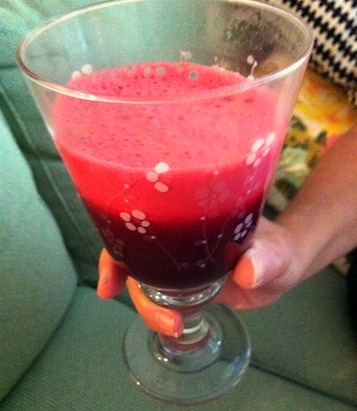
Beets'n'Berries!


Ingredients:

6-8 Strawberries
a few handfuls of Blueberries
1 Beet


Friday, July 8, 2011

honey honey

Honey is a delicious viscous sweetener made naturally by bees for their own nourishment. The fascinating process of making honey begins when the bees feast on flowers, collecting the flower nectar in their mouths. This nectar then mixes with special enzymes in the bees' saliva, an alchemical process that turns it into honey. The bees carry the honey back to the hive, where they deposit it into the cells of the hive's walls. The fluttering of their wings provides the necessary ventilation to reduce the honey's moisture content, making it ready for consumption.

Speakers at the First International Symposium on Honey and Human Health, held in Sacramento, CA, January 8, 2008, presented a number of research papers. (Fessenden R. Report to the Committee for the Promotion of Honey and Health) Findings include:
  • Different varietals of honey possess a large amount of friendly bacteria (6 species of lactobacilli and 4 species of bifidobacteria), which may explain many of the "mysterious therapeutic properties of honey."
  • Honey may promote better blood sugar control. Proper fueling of the liver is central to optimal glucose metabolism during sleep and exercise. Honey is the ideal liver fuel because it contains a nearly 1:1 ratio of fructose to glucose.
  • Experimental evidence indicates that consumption of honey may improve blood sugar control and insulin sensitivity compared to other sweeteners.
  • Honey boosts immunity. Research conducted in several hospitals in Israel found honey effective in decreasing the incidence of acute febrile neutropenia (when high fever reduces white blood cell count) in 64% of patients.
  • 32% of the cancer patients involved in the above immunity research reported improved quality of life.
Shop locally for raw honey at Round Rock Honey :)

Thursday, July 7, 2011

"Let your food be your medicine, and your medicine be your food."
Hippocrates

Monday, June 6, 2011

Keep that ticker tickin'

Heart Problems include high cholesterol, high blood pressure, cardiovascular disease, heart failure and stroke. None of those sound fun. Some of the best healing foods for such diseases are leafy greens - also known as Kale, Swiss Chard, Collard greens, mustard greens, turnip greens and lettuce. All are powerful antioxidants with anticancer preventative qualities.
And if you're not yet convinced... leafy greens are also thought to help prevent certain cancers (colon & ovarian). They are stellar sources of vitamins A and C, chlorophyll, and also contain calcium, iron, folic acid, and potassium.